
Yesterday on Instagram, I posted a Reel sharing a sassy lil’ zinger about how the idea of community is at risk of becoming another commodity. Like most commercial goods, community has been sanitized into something transactional when, in truth, it is far more transcendental. At its best, community can be a transference of energy, a state of presence, a village in which we must all show up as villagers.
In the comments, the brilliant artist Sophia Al-Maria asked a question that piqued my interest: “Where is our generation’s Situationist International?”
I’d never heard of the Situationist International, so I went digging and here’s a quick primer:
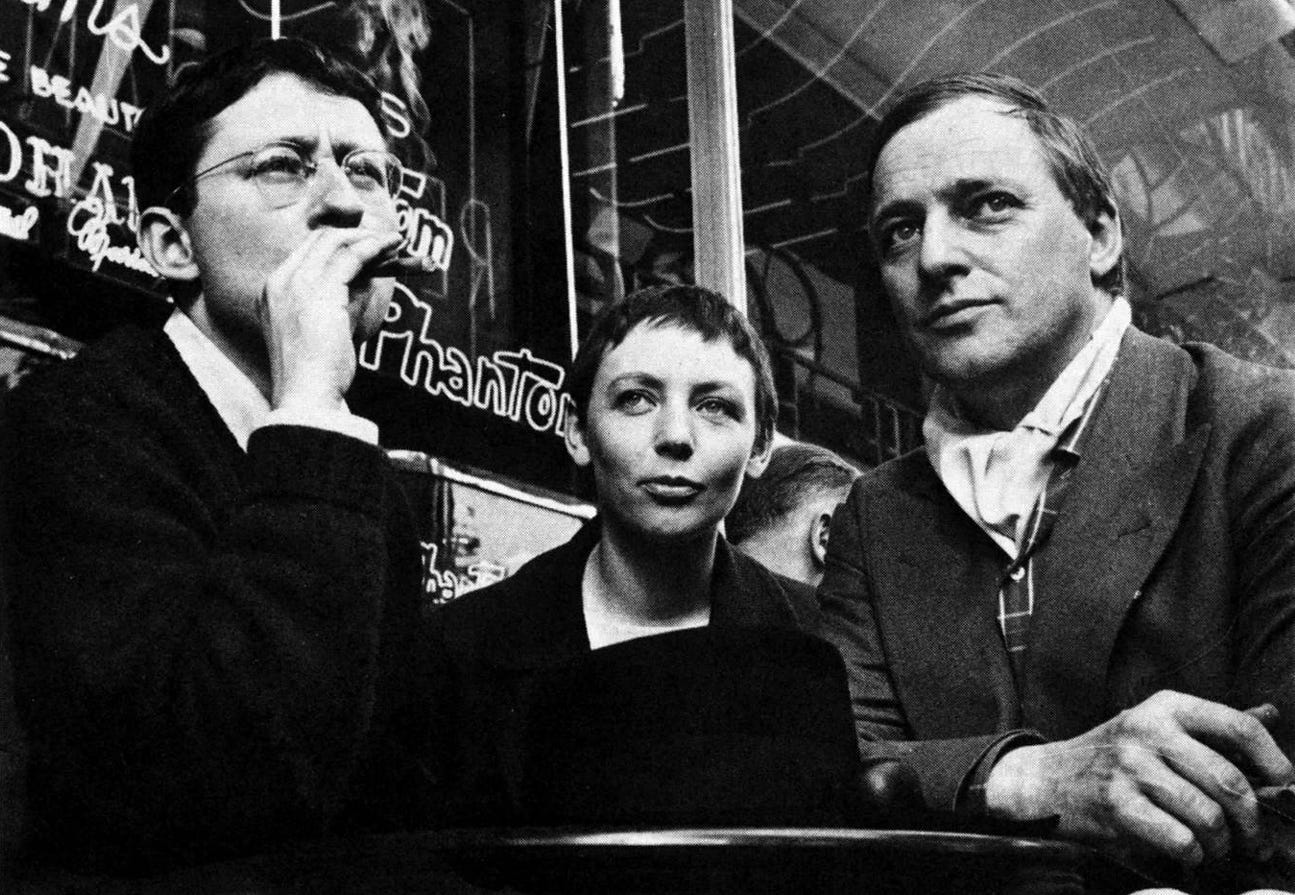
The Situationist International (1957–72) (SI) was a collective of artists, writers, and social critics seeking to dismantle capitalism by revolutionizing everyday life.
Drawing on Letterism, Marxism, Surrealism and Dadaism, they imagined a world where culture wasn’t a commodity to be consumed but a living, breathing part of daily existence. One of the groups core tenants was that “there is no Situationist art, only Situationist uses of art,” which amazingly meant that little to no art was made. Top tier trolling!
Guy Debord, one of SI’s leading figures, famously described modern capitalism as the Society of the Spectacle—a system that manufactures our desires and leaves us perpetually chasing fulfillment through consumption. Sound familiar?
The SI argued that even our cities were designed to serve capitalism, separating people from one another and from their own desires. They introduced the idea of the dérive (French for “drifting”)—aimlessly wandering through urban spaces, following feelings instead of function, to uncover the city’s hidden, enchanting atmospheres. These dérives imagined a future where spontaneity and play—not efficiency and order—shaped the world we inhabit. (Fun fact: Psychologists have recently delved into the concept of “awe,” or the softer journey towards awe-inspiring moments as a path towards better mental and physical health. Huge time for wanderers who are not lost.)
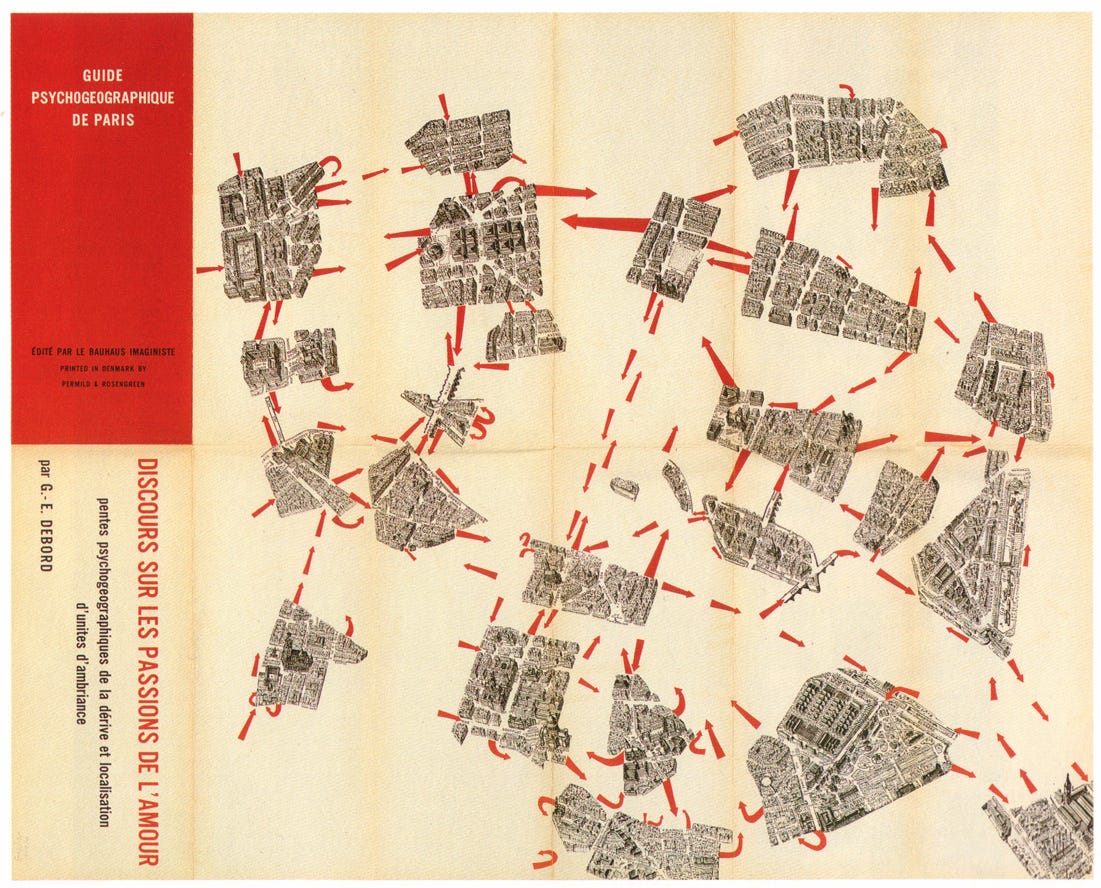
Through wild, often provocative tactics, the SI tried to flip the tools of domination against themselves, revealing the absurdity and emptiness of consumer society. Their vision was utopian: a world where work and play, art and life, finally meet.
Of course, SI wasn’t without its failures—deeply misogynist dynamics meant women were mostly sidelined, making up just 10% of the group and often included only as partners or relatives of male members before being expelled completely in the late 1960s. But even with its flaws, SI carved out an audacious dream of a freer, more imaginative society—one where life itself was art.
If you’re curious to learn more and add some great reads to your library, this YouTube video by Shannon Kim is the great explainer (and truuuuust me, I opened so many tabs). I also picked up plenty of insights from The Art Story, which is a tremendous resource for anyone aiming to piece together the fragments of most chaotic, fascinating movements in the history of art.